MIT Technology Review’s List of 50 Smartest Companies for 2014

This is an annual list of MIT Tech Review Smartest Companies.  Not the ones we see frequently, but companies that have the potential for changing lives in  big way.  “We didn’t count patents or PhDs; instead, we asked whether a company had made strides in the past year that will define its field. The biggest of these strides happened at Illumina, which is driving down the price of DNA sequencing to levels that will change the practice of medicine. We also found dramatic developments on the Web, in batteries, and even in agricultural technologies.

Familiar names such as Apple and Facebook aren’t on this list because reputation doesn’t matter. We’re highlighting where important innovations are happening right now.”

via MIT Technology Review’s List of 50 Smartest Companies for 2014 | MIT Technology Review.

What UPS Drivers Can Tell Us About the Automated Future of Work

Sometimes we can see what the future will look like on a bigger scale when we see what big companies are doing.  This story of how UPS utilizes dynamic data to calculate best delivery routes is an example.  “Take UPS’s On-Road Integrated Optimization and Navigation, or ORION, as an example. The brainchild of Jack Levis, UPS’s director of process management (he worked on it for nearly a decade before the first test implementation in 2008), it uses a variety of data streams — map data, customer information, business protocols, and work rules — to calculate the most streamlined and efficient delivery route … better than any mere mortal ever could.

The system uses so many algorithms — nearly 80 pages of math formulas — that Levis describes it as “something Einstein would have on his blackboard.””

via What UPS Drivers Can Tell Us About the Automated Future of Work | Wired Opinion | Wired.com.

This Woman Invented a Way to Run 30 Lab Tests on Only One Drop of Blood

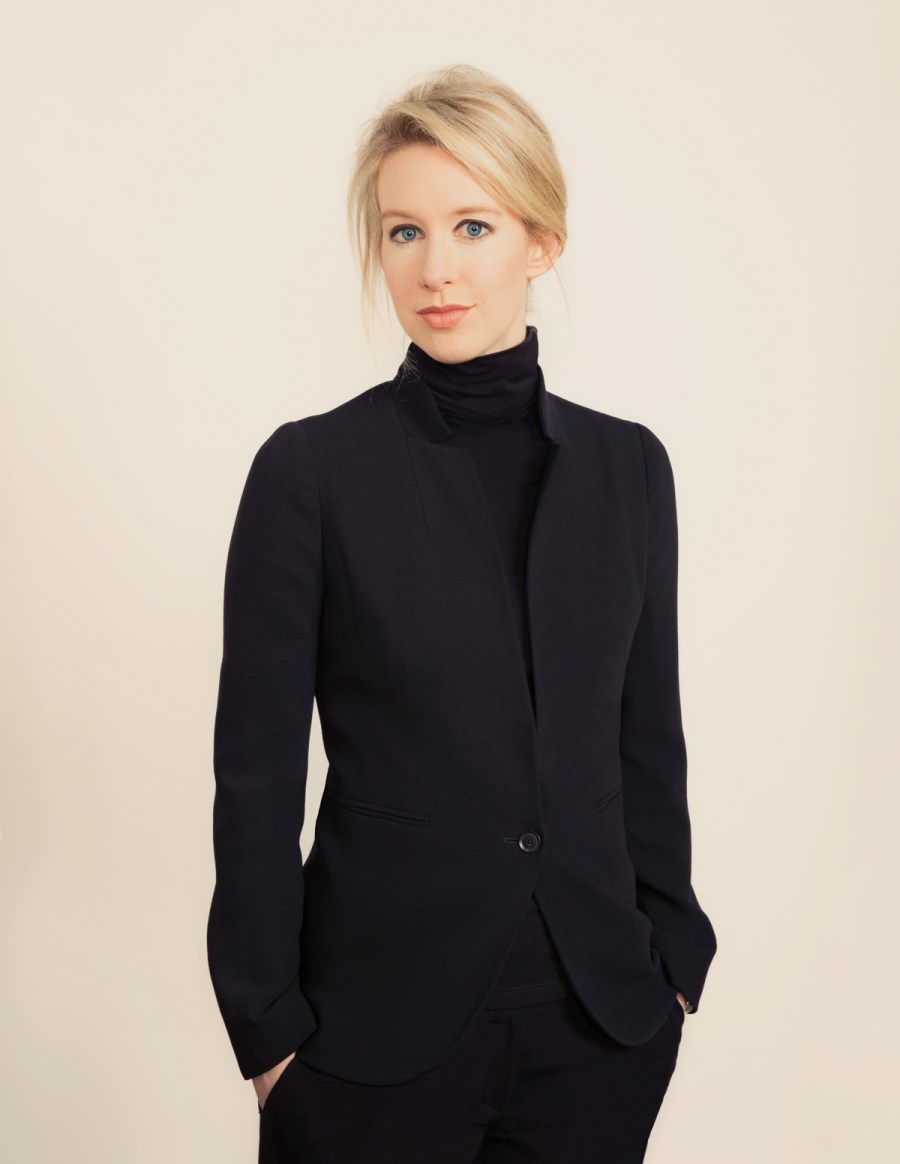
Incredible – Elizabeth Holmes dropped out of Stanford and literally re-invented phlebotomy.  “Instead of vials of blood—one for every test needed—Theranos requires only a pinprick and a drop of blood. With that they can perform hundreds of tests, from standard cholesterol checks to sophisticated genetic analyses. The results are faster, more accurate, and far cheaper than conventional methods. The implications are mind-blowing.”

via This Woman Invented a Way to Run 30 Lab Tests on Only One Drop of Blood – Wired Science.

Your Twitter Conversations Fall Into One of These Six Categories

A recent study from the Pew Foundation categorized Twitter conversations, putting different types of discussion into silos.  I think some of us fall into different categories at different times.  “Researchers concluded that there are roughly six different types of conversational archetypes that take place on Twitter. In other words, most conversations take the form of one of these six general structures: Polarized Crowd, Tight Crowd, Brand Clusters, Community Clusters, Broadcast Network, Support Network.”  From Mashable.

via Your Twitter Conversations Fall Into One of These Six Categories.

In Apple’s healthcare play, will BYOD = Bring Your Own Data?

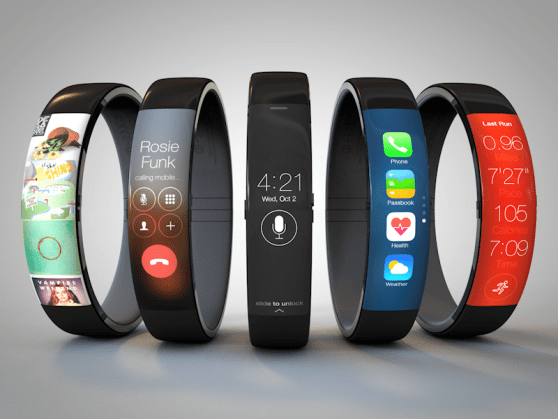
The Quantified Self seems to be Apple’s newest direction.  It’s not really a surprise, as the newest iPhones have a chip that measure our steps and motion, even though few apps take advantage of it.  They’ve clearly been thinking about this for some time, and new reports are making the plans take shape.  “As we sifted through the reports and rumors, we became encouraged about the level of discourse about Apple’s possible healthcare play. Much of the discussion has centered around Apple’s assembly of a high caliber team of experts with deep experience in medical sensors and patient monitoring technologies, which gave further credence to reports of Apple’s possible introduction of an “iWatch” that would allow users to track health and fitness data generated by sensors embedded in the wearable. Some even raised the possibility that Apple might be interested in developing medical devices, peripherals or accessories for the iPhone.”

via In Apple’s healthcare play, will BYOD = Bring Your Own Data? | VentureBeat | Health | by Mark McAndrew, Taft Stettinius & Hollister LLP.

You can’t speculate about technology without speculating about society

With such extreme technological change, we can’t guess anymore.  Not only that, when something new happens, or when there is a new technology, there is not always horizontal adoptions.  This article from Gizmodo makes a very good point.  “Tech changes society, but society shapes tech. That is, social change and technological change go hand in hand, but neither one drives the other.”

via You can’t speculate about technology without speculating about society.

Intel’s Sharp-Eyed Social Scientist

From the NYT, and article that talks about an anthropologist on Intel’s team who researches how we use technology and electronics in our lives – helping them visualize aspirations that take them beyond being a chipmaker.  “Dr. Bell’s title at Intel, the world’s largest producer of semiconductors, is director of user experience research at Intel Labs, the company’s research arm. She runs a skunk works of some 100 social scientists and designers who travel the globe, observing how people use technology in their homes and in public. The team’s findings help inform the company’s product development process, and are also often shared with the laptop makers, automakers and other companies that embed Intel processors in their goods.”

via Intel’s Sharp-Eyed Social Scientist – NYTimes.com.

Jawbone Is Now the Startup Apple Should Fear Most

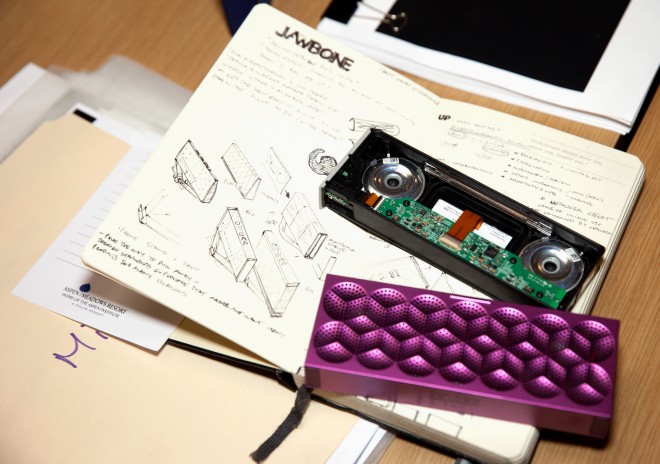
My first “Jawbone” was a bluetooth headset, and Wired is right in this article that discusses how they don’t just perform a function – they redefine the entire gadget.  “Jawbone is ascending into the top echelon of tech startups, joining the likes of Uber, Dropbox, and Square. But unlike these other rising stars, which are redefining digital services, Jawbone is redefining our gadgets themselves.”

via Jawbone Is Now the Startup Apple Should Fear Most | Wired Business | Wired.com.